Showing posts with label Windows Mobile. Show all posts

Android OS Grew By 47 Percent In July, iPad Requests Up 327 Percent

Mobile ad network Millennial Media is releasing its monthly mobile mix report today. According to Nielsen, Millennial’s ads reach 63 million of a total of 77 million mobile web users in the U.S., or 81% of the U.S. mobile web. In July, Android OS grew at a faster clip than in June, with requests increasing by 47 percent, compared to a 23 percent growth in the previous month. Since January, Android OS requests have grown 690 percent. Android has also surpassed RIM to became the number two OS on the Millennial network (surpassing RIM).

Apple ad requests increased 24 percent month-over-month, and are up 15 percent since January. However, iPad requests continue to show massive growth, rising 327 percent in July. RIM ad requests increased 18 percent month-over-month, rising 66 percent since January.

In terms of ad impressions, Apple’s OS remained the leading Smartphone OS on Millennial’s network in July with a 55 percent share of impressions and an 1 percent drop month-over-month. Android was the second largest Smartphone OS, representing a 19 percent share of impressions for June, increasing by 8 percent from last month. RIM’s OS fell to third place after 11 consecutive months in the second spot, representing 16 percent of impressions, dropping by 1 percent from June

Gartner and IDC agree: the Android invasion's accelerating around the world


Last quarter we reported on some pretty stellar growth numbers for Android in the global smartphone marketplace. Back then, Google's OS had a 9.6 percent slice of the pie, but today that's ballooned to a robust 17.2 percent, meaning that in terms of end-user sales over the last three months, Android has nearly matched RIM's BlackBerry sales. That's quite the feat when you consider that a year ago the latter was shifting ten times more units than the former. This fast pace of growth has narrowed down Symbian's lead at the top, in spite of Nokia's favorite OS actually shipping on more phones this year, while the big loser of the quarter has to be Windows Mobile, which contracted both in terms of market share and actual shipments.

Overall, smartphone sales were up by 50 percent year-on-year, according to both Gartner and IDC, while Gartner adds that mobile devices as a whole grew at a tamer 13.3 percent rate. In terms of phone manufacturers' global share, Nokia and Samsung have held on to their top positions, LG, Sony Ericsson and Motorola have experienced some uncomfortable shrinkage, and HTC, RIM and Apple have capitalized to expand their portions. Looking over to IDC's smartphone share data shows, again, that all smartphone makers are growing remarkably well, but it does highlight HTC (129 percent) and Samsung (173 percent) as really improving their presence in the sector. The reason? Android, Android, Android.

iPhone triples Android in mobile market share

The battle between Apple and Google in the mobile space has been heating up lately, but new market share numbers from research firm Nielsen show the race isn't even close.

According to a report released late Friday that compares the fourth quarter of 2009 and the first quarter of 2010, Apple's iPhone OS has more than triple the market share Google's Android operating system has. Nielsen puts the iPhone OS market share at 28 percent, while Android's is at 9 percent.

The numbers put Apple in second place behind BlackBerry maker Research In Motion, which has a 35 percent share. In third place is Microsoft Windows Mobile with 19 percent, followed by Google, Palm (4 percent), Linux (3 percent), and Symbian (2 percent).

Apple and Google both moved up by 2 percent in the first quarter of 2010. In the same period, RIM and Microsoft both lost 2 percent market share.

Samsung Omnia II getting Windows Mobile 6.5.3 upgrade in May?

Launched in the summer of 2009, the Omnia II i8000 is still one of Samsung’s flagship Windows Mobile phones. Unfortunately, just like HTC’s HD2, the Omnia II will not be upgradeable to the new Windows Phone 7 – because of Microsoft’s rigorous requirements.

However, the Samsung Omnia II i8000 will receive a Windows Mobile 6.5.3 upgrade.

According to Samsung Hub, Samsung Sweden has confirmed the WM 6.5.3 update for the Omnia II, and this should come sometime in the second half of May. The upgrade will bring visual enhancements, as well as improved touchscreen responsiveness.

Android Market Share Continues To Gain On The iPhone

comScore has just released its latest report on smartphone marketshare, and the trend we saw last month has continued: Google’s Android is gaining quickly on the iPhone, as Palm and Microsoft’s shares continue to dip. The report compares smartphone market share averaged over the three-month period ending November 2009 against the three months ending February 2010.

The report concluded that 45.4 million people in the United States were using smartphones in the period ending in Feb. 2010, which is a 21% increase over period ending last November. RIM still has a strong lead over the field, with 42.1% of the smartphone market share, and it rose by 1.3% over this period. But the most interesting story is the rapid rise of Android, whose share grew 5.2%. Apple’s share has remained stable, with a .1% drop.

Native Opera Mini 5 beta for Windows Mobile launched

Opera has decided to launch a native version of Opera Mini 5 beta for Windows Mobile – more exactly, for Windows Mobile 5 and Windows Mobile 6 (WM 6.5 and WM 6.5.3 are probably included).


Opera Mini 5 beta for Windows Mobile doesn’t require Java (so it can run on any WM handset), but it comes with the same features that the Java-based version has, including: tabbed browsing, Speed Dial, bookmarks and password manager.

Microsoft Refuses to Confirm Windows Mobile Will Not Be Upgradable

Microsoft declined to confirm reports that smartphones running Windows Mobile 6.x will not be upgradable to Windows Phone 7 Series, its new operating system. Microsoft has made a point of enforcing strict hardware requirements for devices that run Windows Phone 7 Series, which one Microsoft executive reportedly suggested would prevent even newer devices such as the HTC HD2 from running the new operating system. Microsoft previously refused to confirm whether Windows Mobile would be re-branded as Windows Phones Classic once Windows Phone 7 Series is issued to the marketplace at the end of 2010.


Microsoft refused to confirm widely circulated reports that smartphones currently running Windows Mobile 6.x will not be upgradable to the new Windows Phone 7 Series operating system.

Natasha Kwan, general manager of Microsoft’s Mobile Communications Business in the Asia-Pacific region, is quoted as saying in a March 1 article in APC magazine that "because we have very specific requirements for Windows Phone 7 Series, the current phones we have right now will not be upgradable." The article further suggests that the HTC HD2, a smartphone whose full touchscreen would seemingly qualify it to work with Windows Phone 7 Series’ touch-centric interface, would not qualify for upgrading to the new operating system because it has five buttons instead of three.

Windows Mobile 6.x handsets not upgradeable to Windows Phone 7 after all

It looks like there’s a bit of confusion among Microsoft officials at the moment regarding the upgradeability of Windows Mobile 6.x devices to Windows Phone 7.


Last week, Microsoft UK said that upgrades are “really for the hardware partners to think about.”

Today, however, Natasha Kwan, General Manager for Microsoft’s Mobile Communications Business in the Asia-Pacific region, declared to APC that “because we have very specific requirements for Windows Phone 7 Series, the current phones we have right now will not be upgradeable.” Why they didn’t specifically said so from the beginning is beyond me.

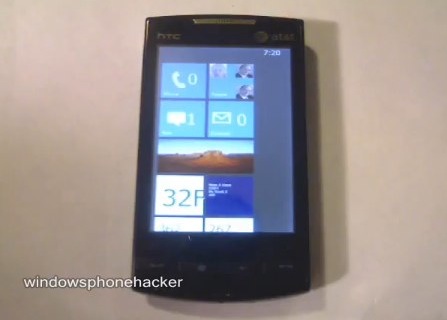
Windows Phone 7 Metro UI skin for WinMo 6.5 gets early alpha video demo

Enchanted by Microsoft’s new Metro UI for Windows Phone 7, but can’t wait until the first handsets running the OS begin to show up later in the year?  Over at XDA-Developers Jaxbot is working on a Metro UI theme for Windows Mobile 6.5 devices, and there’s a very early release available for testing on VGA or WVGA handsets.


When we say “very early”, we mean it.  By Jaxbot’s own admission the UI runs very slow; as you can see in the video demo below it’s not really usable on your everyday device at present.  The promised beta should be far snappier, however.

Windows Mobile 6.5 to become Windows Phone Starter Edition

Windows Phone 7 Series might have been the big news out of Mobile World Congress this year, but it looks like Windows Mobile 6.5 will live on as the basis of Windows Phone Starter Edition. We'd already heard some whispers to that effect, but now it's been confirmed by ZDNet's Mary Jo Foley, who got some answers about the stripped-down mobile OS directly from Redmond. It's obviously designed to be a cheaper alternative for developing and emerging markets, much like Windows 7 Starter on the desktop, and it'll come in versions with and without Office Mobile preloaded when it ships on devices later this year. (Office 2010 will be included when it's officially released.) Here's the odd thing, though: when asked which features of 6.5 have been stripped to create Starter, MS replied with a list of radio support that conspicuously omits HSDPA 3G, but includes EV-DO. Simple typo, or an attempt to force international adoption of WinPho 7 in developed countries with 3G networks? We'll do some digging and find out.

P.S.- Just to be clear here, it appears that the family will be Windows Phone 7 Series, and then potentially two WinMo 6.5 products: Windows Phone Classic and Windows Phone Starter Edition. Only Starter has actually been confirmed at this time, though, and we still don't know exactly how Microsoft is going to organize all of this and sell it. We'll keep you updated.

Nokia, Symbian still lead smartphone market, Gartner says

Gartner, an information technology research firm, has found that while Nokia and Symbian were still solid leaders in the smartphone market in 2009, they might have to watch their backs as Apple and RIM have gained some ground.


In a recently published study, Nokia controlled 36.4% of the worldwide market share, but they might not be too comfortable though, the Finnish manufacturer saw a 2.2% loss. Samsung is in a distant second at 19.5%, but they’ve gained 3.2%, while Motorola and Sony Ericsson aren’t looking so good with only 4.8% and 4.5% respectively after dropping considerably since 2008.

Windows Mobile's Incredible Death Spiral

Before Windows Phone 7 was even an embryo of a concept, Windows Mobile was king: It powered nearly half of smartphones in use, a led the industry in features. Then, in 2007, things started to go wrong. Very, very wrong.


Silicon Alley Insider has charted Windows Mobile's platform share, which is to say the proportion of users who were using it at a given time, over the last four years. For showing decline, figures like these are more telling than sales—they mean that, for years now, people haven't been buying Windows Mobile phones nearly as fast as they've been ditching them.

WM 6.5.3 to become Windows Phone Classic; Windows Phone 6 Starter Edition announced for emerging markets

Since Windows Phone 7 Series is designed for high-end smartphones, Microsoft will still need an OS for mid and low-end devices.


That’s why it will continue with Windows Mobile 6.5.3 – but it looks like it will rename it and call it Windows Phone Classic (via jkOnTheRun and I started something). Most probably, this will happen after Windows Phone 7 Series is launched (sometime in late 2010).

Windows Phone Classic aside, Microsoft will also have an OS especially designed for emerging markets: Windows Phone 6 Starter Edition, which is based on WM 6.5 and will be able to run on both consumer and rugged devices.

Windows Mobile 7 to offer free navigation, while Windows Mobile 6.x becomes free?

Ready for another round of rumors about Windows Mobile 7?


Well, here it is: MS Mobiles has it that WM 7 will feature free navigation – like Nokia’s new Symbian phones, and Android 2.0 (actually, Android 2.0 offers free navigation only for the US at the moment, while Nokia’s offering is available world-wide).

Reportedly, this is not just a rumor, it’s “pure information” – although, of course, no info should be taken as being factual until it’s officially confirmed.

MS Mobiles also repeats what we’ve previously heard: Windows Mobile 7 will feature Zune, Xbox and Bing integration, as well as a new UI.

Microsoft schedules 12 Windows Phone sessions for Mix 10 conference

Microsoft has not just one or two, but now 12 sessions dedicated to Windows Phone app and game and development on the agenda for its Mix 10 conference in mid-March, the company announced on February 4.


Microsoft still isn’t providing any specifics about what the content will be for those sessions (I’m guessing that will come some time after the Mobile World Conference in mid-February in Barcelona). But there are now 12 placeholders on the Mix site for those sessions.

Gen.Y DualBOOT – new dual boot solution for Windows Mobile & Android

If you have a Windows Mobile (6.1 or 6.5) smartphone and want to use Android on it, you can now do it easier than ever, as a new dual boot solution has been recently launched.


Called Gen.Y DualBOOT, the application is free and has been published over at the xda-developers forum.

This is the thread where you can read all the instructions you need and download the application – note that you still have to install Android yourself, before running the app, as this is just an application that lets you choose between Windows Mobile and Android when you start your phone.

Reportedly, the Gen.Y DualBOOT app works with Windows Mobile smartphones that have WVGA, VGA and QVGA screen resolutions.

Google's China moves may hurt Android, help Windows Mobile

Google's decision to postpone the launch of two new Android phones in China this week points to the wider implications of the search giant's potential exit from the market.

A decision to leave China could deliver a blow to Android, which has just recently gained notable momentum, and could bring opportunity to Google's struggling rival Microsoft.

Google had planned to help launch two Android phones from Motorola and Samsung on Wednesday with China Unicom, said Jill Hazelbaker, a Google spokeswoman. She would not say why the launch is now delayed.

After Google publicly revealed a cyberattack on its systems that originated in China, the company followed up with a shocking announcement last week: It would stop censoring search results in China and thus face banishment from the country for failing to comply with local laws. The decision to delay the Android phone launches is likely related to any ongoing talks that Google may be having with China's regulators.

Motorola did not confirm the delayed launch nor answer questions about plans for the future launch of the phone in China. In a statement it said it is committed to offering Android phones in China.

Early Windows Mobile 7 build gets handled, incompatible with previous WinMo apps?


In case you weren't aware, Mobile-review's Eldar Murtazin is somewhat of a living legend around these parts. The Russian-borne phone guru manages to get his hands on an ample number of then-unreleased devices and juicy scoops -- but he's also been known to get things dead wrong from time, so keep that in mind. This time he might've just outdone himself with some apparent hands-on time with Windows Mobile 7. Here's what he's saying via Twitter: the OS has been built on scratch, and none of the old WinMo 6.x apps worked. There's "a lot of horizontal movements, a lot of additional info by clicks... for WM users it will be a great step ahead. For market it's a copycat of Android 3.1/3.2 [sic] or iPhone." No direct comparison to Zune HD, except to say that it's a simpler UI than what he was seeing here, and also no clue on the kernel underneath.
Still, the lack of legacy compatibility is either a huge bummer to the fan base, or if not that then Microsoft is preparing for a two-platform WinMo world. Then again, this is a purported early build (and while we're at it, an unconfirmed hands-on), so who knows what's bound to change before the final release. There's a lot of other details if you're willing to check his feed, or just head over to WMPoweruser for the abridged / "good parts" version. Boy, February just can't come soon enough.

T-Mobile rolls out Windows Mobile 6.5 for Touch Pro2 and Dash 3G, Sprint waits for 6.6 ?


Following closely on the heels of Verizon Wireless, T-Mobile has rolled out Windows Mobile 6.5 for its Touch Pro2 and Dash 3G handsets. The update rolled out earlier than the target date of January 20th and is accessible from T-Mobile’s website once you enter in your handset’s IMEI. While AT&T, Verizon and T-Mobile customers now enjoy the new experience offered by Windows Mobile 6.5, Sprint customers are left waiting in the wings. Their patience may be rewarded as Sprint customers may be getting something more than the plain jane Windows Mobile 6.5 upgrade. A statement from Sprint suggests that the Sprint flavor of Windows Mobile 6.5 may offer “significant enhancements to the Touch Pro2 user interface which will allow additional customization / personalization options and more integration with the applications users access most.” Is Sprint promoting this upgrade with over-hyped marketing speak in order to placate Touch Pro2 owners or is Sprint really alluding to the mythical Windows Mobile 6.6 which is rumored to be unveiled at MWC 2010 next month?

Windows Mobile 6.6 in Feb 2010 with native capacitive touch support?

Not long after those rumors about Windows Mobile 7 being delayed to 2011 appeared, here we have some rather confusing info coming from Taiwan: Microsoft may launch Windows Mobile 6.6 in February this year (possibly at MWC 2010).


Reportedly codenamed Windows Mobile Maldives, the 6.6 version of the OS should bring full support for capacitive touchscreen displays, in order to strengthen Microsoft’s “competitiveness against iPhone and Android-based platforms.”

powered by Blogger | WordPress by Newwpthemes | Converted by BloggerTheme